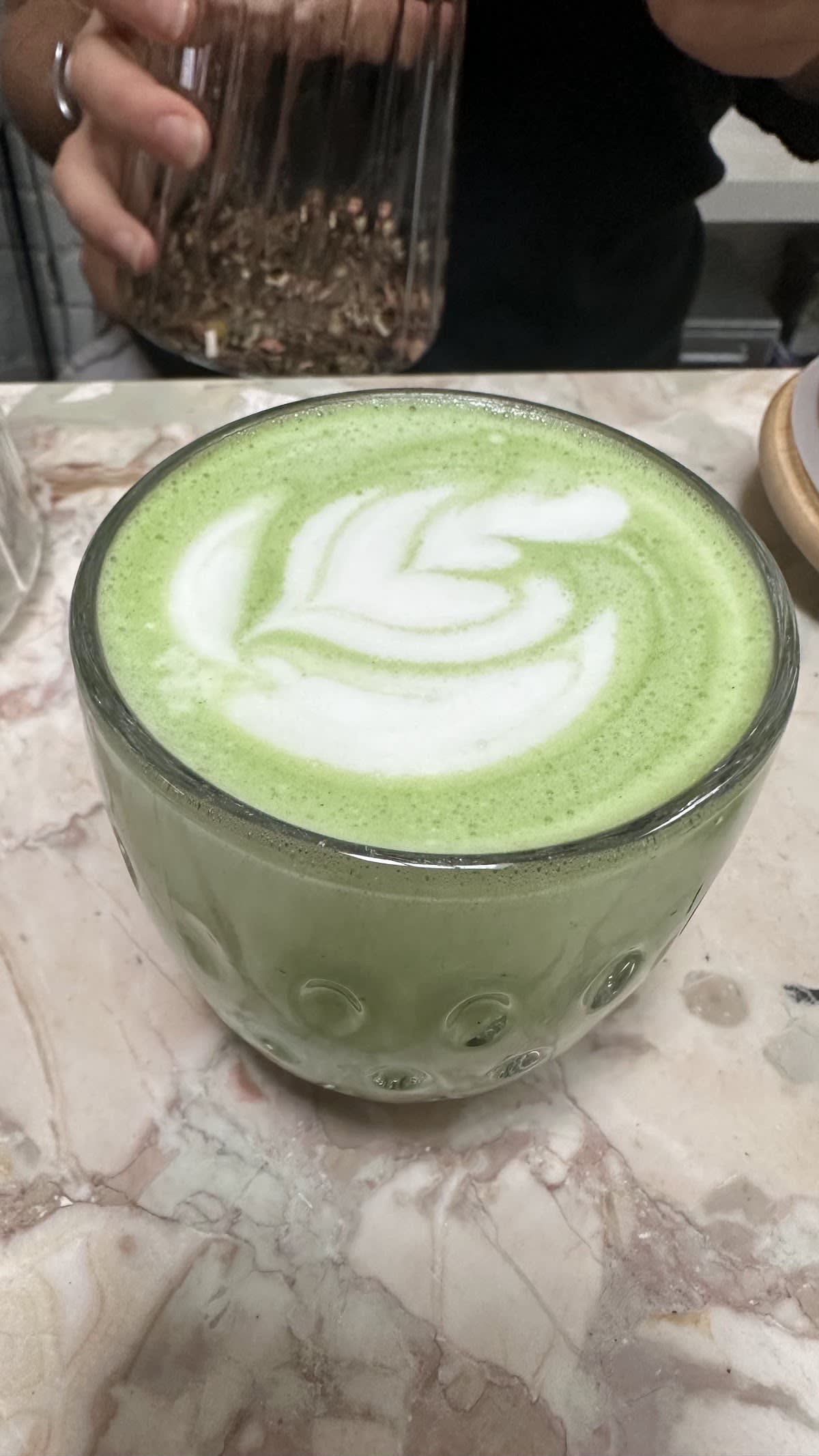
Photo via Google Places • Editorial Use
EducationGlobal
What Do Matcha Quality Grades Really Mean?
Decoding matcha grading systems from ceremonial to culinary grade.
Matcha Maps Staff••6 min read
What Do Matcha Quality Grades Really Mean?
Walk into a tea shop and you'll see matcha labeled "ceremonial," "premium," "café," or "culinary" grade — often at wildly different prices. Here's the thing: there's no official grading system. These terms aren't regulated by any tea industry authority.
So what do these grades actually mean, and how do you know you're getting what you pay for?
The Unofficial Matcha Grading System
While not standardized, the tea industry widely recognizes these tiers:
Ceremonial Grade → Highest quality, for traditional drinking Premium/Café Grade → Mid-tier, suitable for lattes Culinary Grade → Lower quality, for cooking and baking Ingredient Grade → Lowest quality, industrial food use
These grades reflect a combination of leaf quality, processing method, harvest timing, and intended use — not arbitrary marketing terms, though some brands do misuse them.
What Actually Determines Quality?
Leaf Source Matters Most
The single biggest factor is which part of the tea plant the leaves come from.
Ceremonial grade uses: first flush (first spring harvest), the top 2-3 leaves, the youngest and most tender growth, fully shaded for 3-4 weeks.
Culinary grade uses: second or third flush (later harvests), lower leaves from the plant, more mature and tougher growth, minimal or no shading.
The difference is visible: ceremonial grade is vibrant, almost neon green, while culinary grade is duller green with a yellowish tint.
Processing Quality
Higher-grade processing: hand-picked leaves, steamed within hours of harvest, stems and veins fully removed (pure leaf flesh only), stone-ground at controlled temperatures, nitrogen-sealed immediately after grinding.
Lower-grade processing: machine-harvested, may include stems (which add bitterness), larger particle size from faster grinding, standard packaging.
Removing stems and veins ("deveining") is labor-intensive, so premium matcha runs close to 100% pure leaf flesh. Lower grades may include 10-20% stem material, which reads as woody and bitter.
Grading Terminology Explained
Ceremonial Grade
Historically the standard used in Japanese tea ceremonies (chanoyu). Bright, almost luminous green; extremely fine, silky powder; sweet, umami-forward taste with minimal bitterness; dense, creamy foam when whisked. Best for traditional preparation (whisked with just water), koicha, or any context where matcha is the sole flavor. Typical price: $25-40 per ounce (30g).
"Ceremonial" doesn't mean a specific batch was used in an actual ceremony — it means the quality level is high enough that it could be.
Premium / Café Grade
An industry term for mid-tier matcha suitable for cafes: good green color (short of ceremonial brightness), fine texture, balanced sweet and bitter notes, good foam, and flavor that holds up with milk. Best for daily lattes and iced drinks, or anyone who wants real matcha flavor without ceremonial pricing. Typical price: $15-25 per ounce.
This is the practical sweet spot for most regular matcha drinkers — solid quality without paying ceremonial prices.
Culinary Grade
Intended for cooking and baking, not drinking straight: duller green, coarser texture, more bitter and astringent, thinner and less stable foam. Best for smoothies, baking, ice cream, sauces, and budget lattes with heavy sweeteners. Typical price: $8-20 per ounce.
"Culinary" doesn't mean low quality in an absolute sense — it means appropriate for its intended use. Ceremonial grade isn't necessary for matcha cookies, where sugar and butter mask most of the flavor nuance anyway.
Ingredient Grade
Used in industrial food manufacturing: brown or olive tint, very coarse powder, strongly bitter, often older stock. Used in mass-produced packaged foods and supplements — not recommended for direct consumption. Typical price: $5-10 per ounce (lower in bulk).
Quality Indicators Beyond the Grade Label
The label alone isn't enough to trust. A few concrete checks:
Color test: put a small amount on white paper. Quality matcha looks almost neon green; poor matcha looks muddy, brown, or olive.
Texture test: premium matcha feels silky smooth between the fingers with no grit; lower quality feels gritty or sandy.
Smell test: premium matcha smells sweet, vegetal, and slightly grassy; lower quality smells hay-like, musty, or has little aroma at all.
Foam test: premium matcha whisks into a dense, creamy microfoam that persists; lower quality produces a thin, bubbly foam that disappears quickly.
Packaging check: look for an opaque, nitrogen- or vacuum-sealed container, a harvest date within the past 12 months, a specific origin (Uji, Nishio, etc.), and a producer or farm name. Red flags: clear packaging, no date or an old one, a generic "Japanese matcha" claim with no region named, or suspiciously low pricing for something labeled "ceremonial."
Common Grading Myths
Myth: All Japanese matcha is high quality. Reality: Japan produces matcha at every grade level — origin alone doesn't guarantee quality.
Myth: Organic certification indicates grade level. Reality: organic matcha exists at every tier; "organic" refers to growing methods, not quality grade.
Myth: Higher grade always tastes better. Reality: ceremonial tastes noticeably better when drunk plain, but in a chocolate-peanut-butter smoothie the difference from culinary grade mostly disappears.
Myth: Expensive matcha is always worth it. Reality: some brands overcharge — a $60 tin isn't automatically better than a $35 tin if both are genuinely ceremonial grade from reputable producers.
How to Choose the Right Grade
Choose Ceremonial if you drink matcha traditionally (whisked with just water), want to taste pure matcha flavor, or budget isn't the primary concern.
Choose Premium/Café if you mainly make lattes, drink matcha daily, or are new to matcha and don't want to invest heavily before knowing your preference.
Choose Culinary if you're baking, making smoothies with several other strong ingredients, or cost is the deciding factor.
The Bottom Line
Matcha grades reflect real differences in leaf quality, processing, and flavor — they aren't just marketing categories. But since the terms aren't regulated, the label alone isn't sufficient. Check for: bright green color (not brown or olive), specific origin information, a recent harvest date, pricing that's roughly in line with grade ($25-40/oz ceremonial, $15-25 premium, $8-20 culinary), and proper opaque, sealed packaging.
Think of it like olive oil: extra virgin is objectively higher quality, but regular olive oil works fine for sautéing. Same logic with matcha — ceremonial for drinking straight, culinary for baking, and premium as the everyday middle ground.
Share this article
This article was created with AI assistance and reviewed by the Matcha Maps editorial team. Learn more about how we create content.
Want the tea? ☕
Get matcha news delivered to your inbox
No spam, just matcha. Unsubscribe anytime.