Photo via Google Places • Editorial Use
EducationGlobal
How to Prepare Traditional Matcha at Home
How to make traditional matcha at home, step by step — the tools, water temperature, ratio, and whisking technique for a smooth, lump-free bowl.
Matcha Maps Staff••5 min read
How to Prepare Traditional Matcha at Home
Learning to prepare matcha the traditional way turns a simple drink into a small daily ritual. Here's the authentic Japanese method, plus troubleshooting for the most common mistakes.
Essential Tools
- Chawan (茶碗) - A wide, shallow tea bowl
- Chasen (茶筅) - A bamboo whisk with 80-120 prongs
- Chashaku (茶杓) - A bamboo tea scoop
- Natsume or Chaire - Tea caddy for storing matcha
- Furui (茶ふるい) - A fine mesh sieve
Budget alternatives: A wide ceramic bowl, a small fine-mesh strainer, and a measuring spoon (1/2 teaspoon ≈ 1 gram of matcha) work as substitutes for most of the above. A proper bamboo whisk is the one exception worth buying — nothing else creates the same fine, stable foam.
Step-by-Step Preparation
Step 1: Warm the Bowl
Pour hot water into the chawan, let it sit briefly, then discard after about 30 seconds. This helps the matcha dissolve smoothly and keeps the tea at the ideal temperature — cold ceramic can shock the powder into clumping rather than dissolving evenly.
Step 2: Sift the Matcha
Sift 1.5-2 scoops (about 2 grams) of matcha powder into the warmed bowl using the sieve. This removes clumps and produces a smoother final texture. Pressing the powder through with a spoon works better than shaking the sieve.
Step 3: Add Water
Pour approximately 2 ounces (60ml) of water heated to 175°F (80°C) over the matcha powder. Water that's too hot makes the tea bitter; too cold and the powder won't dissolve properly.
Temperature guide:
- Ceremonial grade: 160-175°F (preserves delicate flavor)
- Café grade: 175-185°F (tolerates slightly higher heat)
- No thermometer? Boil water, then let it sit for 2-3 minutes before pouring.
Step 4: Whisk to Perfection
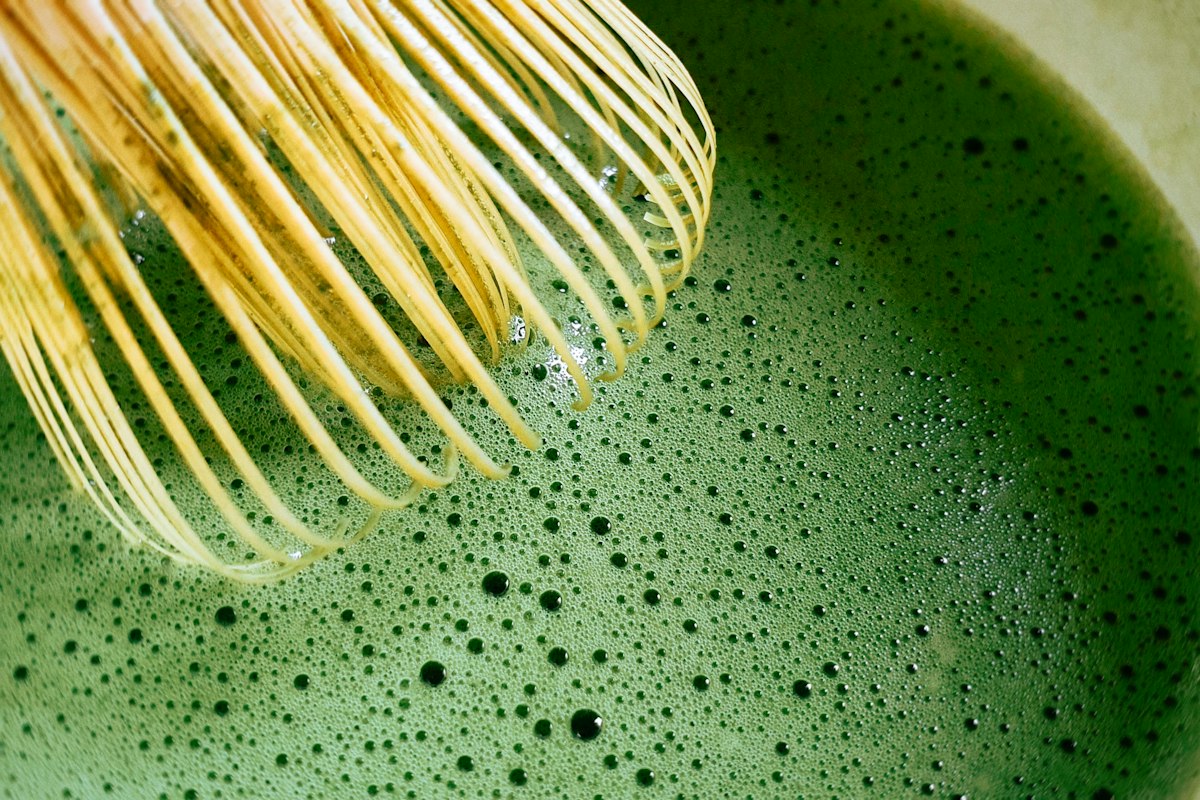
Hold the chasen like a pencil and whisk vigorously in an "M" or "W" motion, keeping the whisk upright and moving from the wrist rather than the arm. Whisk for 15-20 seconds — aim for roughly 80-100 rapid strokes — until a thick, fine foam forms. Most beginners whisk too slowly; the foam should be fine and consistent, not large bubbles.
Step 5: Finish
Slowly lift the chasen from the center of the bowl, gently breaking the foam as you go. The surface should end up smooth with tiny, stable bubbles.
Usucha vs. Koicha
Usucha (Thin Tea) — 2 grams matcha + 60-80ml water, light and frothy. The everyday drinking style.
Koicha (Thick Tea) — 4 grams matcha + 40ml water, thick and syrupy. Reserved for ceremonies and higher-grade matcha, where the concentration is meant to showcase the powder's quality.
Common Mistakes
- Using boiling water — destroys delicate flavor compounds and creates bitterness
- Skipping the sifting — results in lumpy, unpleasant texture
- Weak whisking — won't create proper foam; a tired forearm is a good sign
- Old matcha — loses vibrant color and develops a stale, fishy taste
- Wrong water ratio — too much dilutes flavor, too little makes it bitter
- Stirring instead of whisking — the rapid back-and-forth motion is what builds foam
- Using unfiltered tap water — chlorine and mineral content affect taste
Troubleshooting
Clumps won't dissolve → Sift more thoroughly; check that the water is actually hot enough (not lukewarm).
No foam forming → Whisk faster with more vigor; check whether the chasen's prongs have worn out.
Bitter taste → Lower the water temperature, use fresher matcha, or shorten prep time.
Weak flavor → Use slightly more matcha (2.5-3 grams), check freshness, or try a higher grade.
Storage
Matcha oxidizes quickly once opened:
- Refrigerate after opening (40°F or below)
- Use within 1-2 months for best flavor
- Keep airtight in the original sealed packaging
- Never freeze — condensation on thawing ruins the powder
Unopened matcha generally stays fresh for 12-18 months when refrigerated.
Caring for the Tools
After each use, rinse the chasen with warm water (never soap on bamboo) and air-dry it upside down on a chasen holder. A well-maintained chasen typically lasts 50-100 uses; replace it every 3-6 months depending on frequency, or sooner if prongs start breaking or foam gets harder to create.
Cold Matcha Preparation
For iced matcha: prepare usucha with less water (40ml hot water) to create a concentrated base, whisk as normal, then pour over ice (80-100g) and add cold water or milk to the desired strength. Don't try to whisk matcha with cold water from the start — it won't dissolve properly regardless of technique.
The Ritual Mindset
Traditional matcha preparation is as much about mindfulness as the tea itself — taking time with each step, noticing the color, aroma, and texture. As the Japanese saying goes, "一期一会" (ichi-go ichi-e) — "one time, one meeting." Each bowl of matcha is a distinct moment.
Share this article
This article was created with AI assistance and reviewed by the Matcha Maps editorial team. Learn more about how we create content.
Want the tea? ☕
Get matcha news delivered to your inbox
No spam, just matcha. Unsubscribe anytime.